
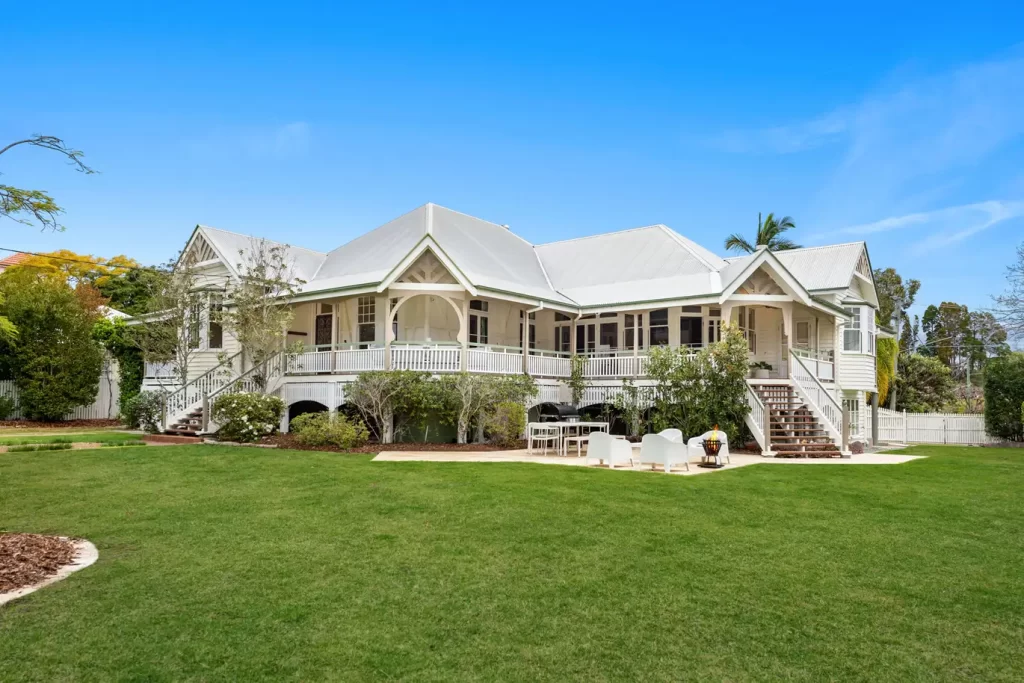
Watching a massive Queenslander or a classic Colonial cottage gliding down the highway in the middle of the night is a sight that stops traffic. It looks like a magic trick—a solid, heavy structure that was sitting on a block of land yesterday is suddenly mobile. But for the team at Dalby Removal Homes, this isn’t magic; it’s a carefully choreographed feat of engineering, logistics, and skilled labour.
For many homeowners and renovators, the idea of buying a removal home is incredibly appealing. It’s sustainable, often more affordable than building new, and gives you instant character that modern builds struggle to replicate. However, the process of actually getting that house from our depot in Dalby to your block of land can seem daunting. How do you move something that wasn’t designed to move? What about power lines? How do you ensure it sits level on the new site?
The reality is that relocating a house is a highly coordinated process. It requires precise planning, specialised hydraulic lifting equipment, and a deep understanding of transport regulations across Queensland and New South Wales.
Whether you are looking to save a piece of history or simply want a faster route to home ownership, understanding the journey your house takes is the first step. In this transparent walkthrough, we’re pulling back the curtain on exactly how we prepare, transport, and re-stump a removal home, ensuring it arrives safely and stands the test of time.
Step One: Preparing the Home for Relocation
Before a single truck engine is started, the home must be surgically prepared for the journey. A house is a rigid structure designed to sit on static foundations, so making it road-ready involves significant preparation to ensure it withstands the vibrations and movements of transport.
Internal and External Preparation
The process begins with stripping the house of elements that might be damaged or cause obstructions during the move. Externally, this often involves removing brick chimneys, concrete stairs, or low-hanging eaves that could increase the width or height of the load beyond legal limits.
Internally, we don’t just lock the doors and hope for the best. Loose items must be secured or removed. We also advise on the disconnection of all utilities—power, water, gas, and sewerage—well in advance. This ensures that when our team arrives to lift the home, there are no live connections posing safety risks.
Structural Bracing
This is arguably the most critical part of the preparation phase. To prevent the house from twisting or racking while it is suspended on the trailer, we install temporary structural bracing. This might involve cross-bracing walls or adding supports to large open spaces.
If the home is a particularly wide design—generally anything wider than 9 metres—we may need to cut the house into two sections to fit onto the road network. This is done with precision cutting tools through the roof, floor, and walls. While it sounds drastic, these sections are weather-proofed and braced individually, ready to be “stitched” back together on your site seamlessly.
Step Two: Engineering, Permits and Compliance Approvals
While the physical preparation is happening on the ground, a mountain of work is happening in the office. Relocating a building triggers a complex web of compliance requirements involving local councils, state transport authorities, and independent engineers.
Structural Certification
Every removal home requires a structural assessment. An engineer will inspect the timber frames, roof trusses, and sub-floor to certify that the building is sound enough to be moved. They will also determine the wind rating (e.g., C1, C2, or N3) required for the new location, which influences how we tie down the roof and stump the house at its destination.
Council and Transport Approvals
You cannot simply put a house on a truck and drive. We must obtain:
- Building Removal Approval: Permission from the local council to remove the building from its original site.
- Building Approval (BA): Permission from your new local council to site the home on your block. This often involves a bond (usually between $10,000 and $30,000) held by the council to ensure renovations are completed.
- NHVR Permits: The National Heavy Vehicle Regulator (NHVR) issues permits for oversized loads. Since removal homes are classified as “Class 1” loads, they exceed standard dimensions and mass limits.
Navigating QLD and NSW Regulations
The rules for house relocation in QLD can differ significantly from NSW. For example, moving a house across the border or over the Great Dividing Range introduces “Single Limited Area” constraints, which might mandate cutting a house in two even if it fits on a single trailer elsewhere. Having an experienced team to navigate these bureaucratic waters is essential to avoid fines or delays.
Step Three: Lifting the Home Onto Hydraulic Jacks
Once the paperwork is signed and the house is braced, the heavy lifting begins. This stage requires patience and precision, utilising powerful hydraulic technology to elevate the structure safely.
The Lifting Process
Our team positions a series of hydraulic jacks under the load-bearing bearers of the house. These jacks are linked to a central control unit, allowing the entire house to be lifted uniformly. Lifting it unevenly could crack plasterboard or stress the timber frame, so the ascent is slow and controlled.
inserting the Steel Beams
As the house rises, we slide heavy-duty steel I-beams underneath the sub-floor. These beams act as a temporary chassis, distributing the weight of the house across the length of the trailer rather than letting it rest on a few points.
Once the house is high enough—usually around 1.5 to 2 metres in the air—the specialized hydraulic trailer is reversed underneath. The house is then gently lowered onto the trailer’s bolsters and chained down securely. At this stage, we also assess the weight distribution. If the house is heavier on one side (perhaps due to a hardwood kitchen or tiled bathroom), we adjust the placement on the trailer to ensure stability on the road.
Step Four: Transport Route Planning and Safety Checks
Driving a 7-metre wide load down a public highway isn’t something you do on a whim. The route from Dalby to your block is planned down to the centimetre.
Identifying Obstacles
We conduct a thorough route survey to identify hazards. This involves:
- Measuring Bridge Clearances: Ensuring the loaded house fits under overpasses.
- Road Widths: Identifying narrow pinch points, roundabouts, or traffic islands that might require street signs to be temporarily removed.
- Power Lines: We coordinate with energy providers like Ergon Energy or Essential Energy. If power lines are too low, electrical crews must travel with us to physically lift the wires over the roof of the house.
Timing and Traffic Control
To minimise disruption to public traffic, most house relocations happen at night, typically between midnight and dawn. This timing allows us to occupy multiple lanes without causing gridlock. We also coordinate with police and local councils to ensure we have the necessary permissions to occupy the road.
Step Five: Transporting the Home to the New Site
The night of the move is the main event. It is a slow, careful journey where safety is paramount.
The Convoy
Your house never travels alone. It is the centrepiece of a convoy designed to warn other road users and guide the truck driver.
- Pilot Vehicles: For loads wider than 3.5 metres (in QLD), pilot vehicles with flashing amber lights and “Oversize” signs travel in front and behind the truck. They scout the road ahead and warn oncoming traffic.
- Police Escorts: If the house is exceptionally wide or long, or if the route involves critical roads, police escorts are required to control traffic intersections.
Managing the Drive
The transport truck moves at a reduced speed, often capped at 80km/h on open highways and crawling at walking pace through towns. The driver is in constant radio communication with the pilot vehicles, who provide real-time updates on road conditions, approaching traffic, or low branches.
The hydraulic trailer also plays a huge role here. The driver can raise or lower the deck height on the fly to clear a guardrail or squeeze under a bridge, ensuring the house remains level even if the road cambers.
Step Six: Onsite Delivery and Positioning
Arriving at your block is a milestone, but the job isn’t done yet. Now comes the challenge of manoeuvring a massive structure onto a specific patch of dirt.
Manoeuvring Constraints
Unless you have a large acreage block with a wide gate, site access can be tricky. We often have to navigate narrow driveways, soft soil, or existing trees. In some cases, a second machine (like a bulldozer or tractor) is used to assist the truck in positioning the trailer exactly where the footings will go.
Final Alignment
Once the trailer is roughly in position, we use the hydraulic system to fine-tune the placement. We check the site boundaries to ensure the house is setback correctly according to your council approval. The house is then jacked up again off the trailer using cribbing (stacks of timber blocks), allowing the truck to drive away, leaving the house “floating” in the air, ready for its new legs.
Step Seven: Re-Stumping and Relevelling the Structure
A house is only as good as its foundation. Re-stumping is the process of giving your removal home a permanent, stable base on your land.
Stump Options
At Dalby Removal Homes, our standard inclusion usually involves steel adjustable stumps. These are fantastic for Queensland soil conditions (especially reactive clay) because they allow for easy re-levelling in the future if the ground shifts.
- Steel Adjustable Stumps: Strong, durable, and adjustable.
- Concrete Stumps: Traditional and solid, but harder to adjust later.
- Timber Stumps: Less common now due to termite risks, but sometimes used for heritage aesthetics.
The Process
- Holes and Footings: We dig holes to the required depth based on the soil test results. Concrete pads or footings are poured.
- Setting the Height: We set the stump height. Standard legal height underneath is often 2.4 metres if you plan to build in underneath, but for a standard low-set home, we verify the desired floor level.
- Levelling: Using laser levels, we ensure every stump is perfectly aligned. This is critical—if the stumps aren’t level, your doors won’t close and your floorboards will creak.
- Tie-Downs: We bolt the bearers to the stumps and install cyclone rods or bracing to meet the wind rating requirements of your area.
Stitching it Back Together
If your house was cut for transport, this is when we rejoin it. The sections are pushed together, bolted, and the roof, walls, and floors are reconnected. While there will be some cosmetic evidence of the move (like cracks in the plaster cornice), the structural integrity is restored.
Step Eight: Post-Delivery Checks and Next Steps
Once the house is stumped and tied down, our major role is complete, but there are a few final steps before you can move in.
Reconnection of Services
It is the owner’s responsibility to engage a plumber and electrician to reconnect the home to the mains power, water, and septic systems. Because the house was disconnected in Dalby, the internal wiring and plumbing are usually intact, but the connection from the house to the street needs to be established.
Final Inspections
Before you can legally inhabit the home, a private certifier or council inspector must conduct a final inspection. They will check the tie-downs, the stumping, and the smoke alarms. Once they are satisfied, they issue the Certificate of Occupancy, which also triggers the release of your council bond.
Why Working With Experienced House Relocation Specialists Matters
You might be tempted to think, “Can I project manage this myself?” The answer is theoretically yes, but practically, the risks are immense.
Moving a house involves heavy rigid loads, dangerous heights, and strict legal liability. By working with seasoned professionals like Dalby Removal Homes, you are leveraging decades of experience. We know which bridges are too low. We know which soil types require deeper footings. We have the relationships with the police, the NHVR, and the councils to get permits approved efficiently.
Choosing a specialist minimises the risk of structural damage during the move and ensures that when the house lands on your block, it’s legal, safe, and ready for its next chapter.
Your Journey Starts Here
From the initial lift in Dalby to the final bolt on your new block, relocating a home is a journey of transformation. It allows you to preserve a piece of architectural history and create a unique home that stands out from the crowd.
If you are considering a removal home, don’t let the logistics overwhelm you. We are here to handle the heavy lifting—literally.
Ready to find your dream removal home? Browse our current Houses For Sale or contact us to discuss your block’s suitability. You can also learn more about our team on our About Us page. Let’s get your project moving.
